

Wild animals don’t follow rules, and a normal outing can shift into survival mode in seconds. From ocean predators to stealthy big cats and powerful northern mammals, dangerous animal incidents leave lasting physical and emotional scars. The top stories highlight how quickly a single encounter can change everything.
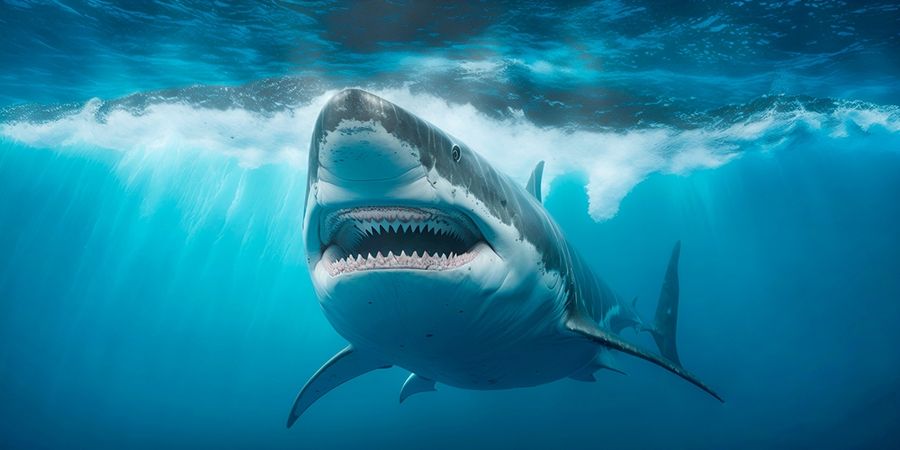
2007: Diver Pulled Into a Great White’s Mouth Off Eden, Australia
In 2007, diver Eric Nerhus was collecting shellfish near Eden, Australia, when a shark believed to be a great white lunged and grabbed him, headfirst, about 25 feet below the surface. Nerhus later described the horrifying moment as “half my body” being inside the shark’s mouth, with the animal crushing his goggles into his face. He credited a lead-lined vest with preventing the shark from biting him in half while he fought to escape.
Nerhus said he jabbed the shark’s eye area and used a chisel (a tool he had for gathering shellfish) to fend it off until the jaws opened and he could wriggle free. Bleeding heavily, he surfaced while still watching the shark circle nearby and was rushed to a hospital for severe cuts to his head, torso, and arm.
2007: Mountain Lion Attack in a California State Park
In 2007, Jim Hamm and his wife Nell Hamm, were hiking in Prairie Creek Redwoods State Park in Northern California when a mountain lion attacked and wrestled Jim to the ground. Nell grabbed a large branch/log and repeatedly struck the animal while trying to make it release her husband. During the struggle, Jim told her a pen was in his pocket, and Nell attempted to jab the lion in the eye after the log alone didn’t stop the attack.
The lion eventually let go, and Nell kept the animal at bay until it retreated. Wildlife officials later tracked lions near the trail and took action as part of the response. Jim required hospital treatment for serious injuries, including scalp trauma and puncture wounds. The incident is a stark example of how quickly a quiet trail can become dangerous, and how a companion can make the difference between survival and tragedy.
1997: Snorkeler Trapped Underwater in an Alligator’s Jaws in Florida
In 1997, James Morrow was snorkeling at Juniper Springs in Florida during a canoe trip when an 11-foot alligator clamped down on him underwater. Reports described him being pulled down in the gator’s jaws, suffering serious injuries, including a punctured chest and a collapsed lung. The attack lasted long enough to feel endless, and Morrow later described the terror of being held beneath the surface while trying to fight back.
He ultimately escaped and made it back to help, but the injuries were severe and required hospital care. The alligator was later captured/killed by trappers after the incident. While alligator encounters often sound unlikely to tourists, this story is a reminder that even clear, calm water can conceal a powerful predator capable of a sudden, overwhelming strike.
2003: Polar Bear Mauling Near Kimmirut, Nunavut
In 2003, Inuit guide Kootoo Shaw was attacked near Kimmirut, Nunavut, when a 400-pound polar bear dragged him across the tundra by his toes toward the ocean. Shaw said the bear got inside their tent area, and after he fled, he tripped, giving the bear the opening to pin him and clamp down on his head. He described the bear ripping his scalp “like paper,” leaving him with severe head trauma and serious wounds across his back.
A member of the group shot the bear, stopping the attack, and Shaw remained conscious through the aftermath and transport back for urgent medical care. He later underwent extensive surgery and spoke about ongoing nightmares and lasting scars. The story also raised safety concerns about whether guides had adequate means of protection in remote environments where help is far away, and top predators are part of the landscape.
2026: Four Shark Incidents in Three Days Prompt Beach Closures in Australia
In 2026, a rapid cluster of shark incidents along Australia’s New South Wales coast triggered beach closures and urgent warnings. According to reports, a surfer suffered minor injuries after a shark attacked his surfboard near Point Plomer, marking the fourth incident in three days. Authorities cited murky water after rainfall as a factor that can increase risk, particularly for bull shark activity, and some officials advised swimmers to avoid the ocean and choose pools instead.
The same coverage referenced other recent incidents: a 12-year-old boy was attacked after jumping from a ledge at a Sydney harbor location and was pulled to shore by friends, while another youth’s surfboard was bitten at a different beach. The report also noted prior tragedies in the region where people passed away in separate shark encounters, underscoring that spikes in activity can quickly strain local safety measures and change everyday beach routines.
When Nature Collides with Routine
Dangerous animal incidents often share one unsettling theme: the encounter begins during ordinary moments, like work, recreation, a hike, or a swim. Each story shows how fast conditions can shift, and how survival can hinge on split-second decisions, nearby help, and sheer luck. Even in well-known destinations, wildlife behavior can be unpredictable, especially when visibility, weather, or habitat conditions change.
Awareness doesn’t guarantee safety, but it can shape smarter choices, like staying alert to warnings, respecting closures, and recognizing that an animal’s “normal” isn’t a human’s normal. For survivors like Nerhus, Hamm, Morrow, and Shaw, the aftermath wasn’t just physical recovery; it was carrying a permanent reminder that wild places remain wild, even when they look calm.