

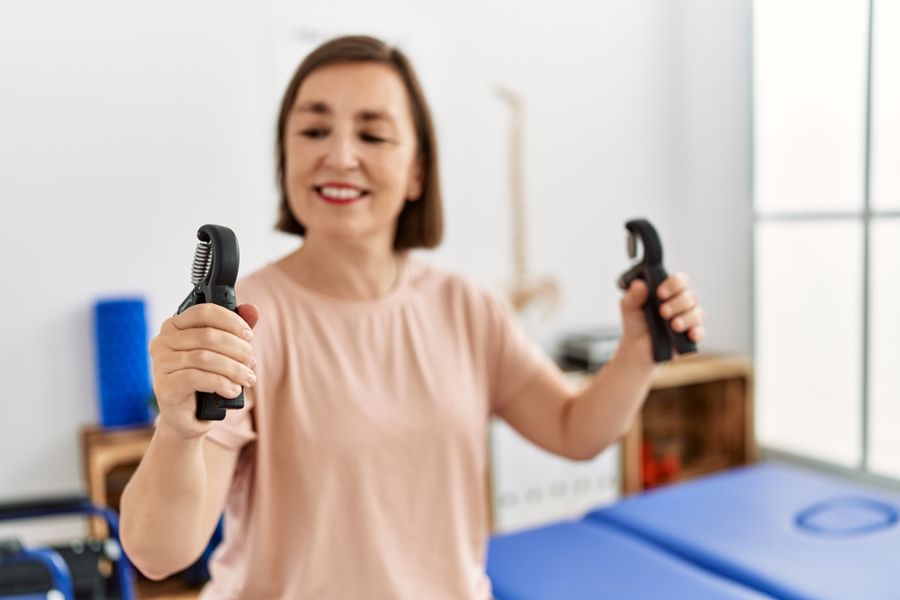
Weak grip can make ordinary tasks feel harder than they should. Opening jars, carrying grocery bags, turning keys, holding tools, lifting pans, or even using a phone can all depend on hand and forearm strength. Grip strength tools offer a simple way to train those muscles at home, but the best choice depends on what you want to improve, how your hands feel, and how safely the tool fits into your routine.
Why Grip Strength Is So Important
Did you know that hand strength connects to broader functional concerns? Grip strength can reflect overall muscle strength, while function in daily activities, work, and leisure is a key part of hand therapy evaluation.
That makes grip training worth taking seriously, not just as a gym goal but as a practical support for daily life. Grip-focused training tools promise a simple fix, but not every tool works the same way, and pushing too hard can make sore hands feel worse.
What Grip Strength Tools Actually Do
Grip strength tools are not all designed for the same job. Some train your ability to squeeze, while others focus on finger control, hand opening, wrist stability, or carrying strength. The right tool depends on the kind of daily task you want to make easier. Popular options include:
Squeeze Balls
A squeeze ball is one of the simplest grip tools. It mainly trains crushing grip, which is the hand strength used when you hold a bottle, squeeze a handle, carry a small item, or grip an object without dropping it. Softer balls are better for light daily movement, while firmer versions create more resistance.
Therapy Putty
Therapy putty is more flexible than a basic squeeze tool because it can be pressed, pinched, rolled, stretched, and pulled apart. That makes it useful for finger control, pinch strength, and small hand movements. It can be a good fit for people who want a slower, more controlled routine instead of repeated hard squeezing.
Spring Hand Grippers
A spring hand gripper gives a more direct strength challenge. It trains the closing motion of the hand and can be useful for people who want a clearer squeeze-and-release exercise. The downside is that some grippers may feel too aggressive for sensitive hands, so resistance level matters.
Finger Extensor Bands
Finger extensor bands train the opposite motion from squeezing. Instead of closing the hand, they make the fingers open against light resistance. This can help balance a routine for people who do a lot of gripping, typing, tool use, or phone use during the day.
Carry-Based Tools
Dumbbells, kettlebells, loaded bags, or other safe household weights train support grip. This is the grip used when carrying groceries, laundry baskets, work bags, garden supplies, or heavier household items. Carry training also brings the wrists, forearms, shoulders, and posture into the movement, so it feels closer to real life than squeezing a small tool in place.
The best tool is not always the hardest one. A better test is whether it matches the task you want to improve, whether the resistance feels controllable, and whether your hands feel better rather than irritated after use. For people with arthritis, stiffness, swelling, or pain, gentler movement may be a better starting point than forceful gripping.
How Grip Training Works in Daily Life
A real routine does not need to look like a gym program. Someone who struggles with grocery bags may practice short farmer carries with light household weights. Someone who has trouble opening lids may use a soft squeeze ball or putty to build controlled pressure. Someone who spends hours typing may benefit from gentle finger-opening work to balance all the gripping and flexing done during the day.
In our review of this category, the most useful tools were the ones that made practice easy to repeat. A hand gripper can work for someone who likes a clear squeeze-and-release motion, but it may feel too aggressive for sensitive hands. Putty feels slower, but it gives more control because the user can pinch, roll, press, stretch, or squeeze it in different ways.
The biggest mistake is treating grip work as a contest. Better function usually comes from steady, comfortable practice. It’s recommended that first-time hand-strengthener users start with low resistance and build up gradually to avoid injury, which is the right mindset for most people training at home.
Who Gets the Most Everyday Value
Grip tools are most useful for people who can connect the exercise to a real task. The goal is not just a stronger squeeze, but an easier day.
- Someone who struggles to open jars, bottles, or food containers and wants a low-effort way to practice controlled squeezing
- Someone who carries groceries, laundry baskets, work bags, or gardening supplies and wants better holding endurance
- Someone returning to hand use after a mild layoff, with guidance from a clinician if pain, injury, surgery, numbness, or swelling is involved
- Someone who wants a small desk or couch routine that supports hands and forearms without a full workout setup
For many users, the best starting point is not the hardest hand gripper. A softer ball, light putty, or gentle finger band may be easier to use consistently. The tool should make the routine feel doable, not punishing.
Where Grip Tools Fall Short
Grip tools can help, but they are not a full strength plan. A person with weak hands may also need stronger shoulders, arms, core, and legs to carry items safely. Strength-training guidance for older adults emphasizes broader strength work for muscle, bone, balance, coordination, and mobility, not just one body part.
They can also be the wrong choice during a flare-up or injury. If gripping causes sharp pain, numbness, tingling, swelling, or loss of motion, more squeezing is not a smart fix. Hand symptoms can come from arthritis, tendon irritation, nerve compression, or other conditions that need a different approach.
The other downside is overuse. Small tools are easy to keep on a desk, which makes it tempting to squeeze them all day. That can irritate the hand or forearm if the resistance is too high or rest is ignored. A short routine done well is better than constant repetition.
What the Cost Really Depends On
The cost side is mostly shaped by complexity, adjustability, and durability. A simple squeeze ball or therapy putty is usually the most basic type of tool. Adjustable hand grippers, specialty finger trainers, and heavier carry tools tend to feel more like exercise equipment because they offer more resistance or progression.
The better value depends on the job. If you want a gentle tool for daily hand movement, putty or a soft ball may be enough. If you want measurable progress, an adjustable gripper or carry tool may make more sense because it lets you increase the challenge over time.
Do not pay for complexity you will not use. A tool that sits in a drawer has no value, even if it looks more serious. The better buy is usually the one you can use safely, comfortably, and repeatedly.
How to Decide Which Grip Tool Fits
If your main problem is opening jars, start with a squeeze ball or therapy putty. Those tools let you practice controlled pressure without needing a heavy gym setup. If your fingers feel stiff, gentle range-of-motion exercises may be more useful than forceful squeezing, especially if arthritis is part of the picture.
If your main problem is carrying things, choose a support-grip approach. Light farmer carries, dumbbells, kettlebells, or loaded tote bags can train the hand and forearm in a way that feels closer to real life. Start lighter than you think you need, then focus on posture, smooth walking, and a secure hold.
If your hands feel overworked from typing, phone use, or tool use, add finger-opening work rather than only more squeezing. Extensor bands can help train the muscles that open the fingers, creating a more balanced routine. If you have pain, swelling, numbness, or a medical condition affecting the hands, get professional guidance before adding resistance.
Frequently Asked Questions
Do grip strength tools really help everyday function?
They can help if the tool matches the task you want to improve. A squeeze ball may help with controlled gripping, putty may help with pinch and finger control, and carries may help with holding bags or household items.
Are grip tools safe for people with arthritis?
They may be useful for some people, but comfort matters. Hand exercises may be recommended for people with arthritis to improve flexibility and range of motion, so anyone with painful or swollen joints should choose gentle movement and follow clinical advice when needed.
The Verdict on Grip Strength Tools
Grip strength tools are worth using if they make daily hand tasks easier and let you train safely without aggravating pain. The most reliable choice is a low-resistance tool that matches a real-life problem, because steady practice beats a harder tool that never becomes part of the routine.
We created this article in conjunction with AI technology, then made sure it was fact-checked and edited by a SpendModo editor.