

Daily movement gets easier when your body can bend, reach, twist, balance, and recover without feeling stiff all the time. At-home mobility tools can help you build small routines around tight hips, sore feet, stiff shoulders, weak balance, or limited range of motion. While they do not replace medical care or physical therapy, the right mobility tools can support steady movement habits when used safely, gently, and consistently.
What Mobility Tools Can and Cannot Do
Mobility tools are useful because they make it easier to practice movement at home. A foam roller can help you apply pressure to tight muscles. A stretch strap can help you reach positions that would otherwise feel awkward. Resistance bands can help build strength through controlled movement.
These tools should not be used to push through sharp pain, numbness, swelling, or a new injury. Mobility work should feel manageable, not punishing. If a movement causes pain that lingers or gets worse, stop and get professional advice before continuing.
Foam Roller
A foam roller is one of the most useful at-home tools for people who feel tight after sitting, walking, lifting, or exercising. It uses body weight to apply pressure to larger muscle areas, such as the calves, quads, glutes, upper back, and outer hips. Foam rolling is often used as a form of self-myofascial release and may help improve range of motion for a short time after use.
The best way to use a foam roller is slowly. Roll over a tight area, pause when you find a tender spot, and keep breathing. Avoid rolling directly over joints, bones, or the low back. A softer roller is usually better for beginners, while a firmer roller may suit people who already know how much pressure they can handle.
Pros:
- Helpful for large muscle areas
- Easy to use before or after workouts
- May help with short-term range of motion
- Good for people who sit for long periods
Cons:
- Can feel too intense if the roller is very firm
- Awkward for people with limited floor mobility
- Not ideal for bony areas or joint pain
- Benefits may be temporary without regular movement
Top Choice
The TriggerPoint GRID 1.0 Foam Roller is a strong fit because it has a hollow-core design made to hold its shape after repeated use, along with an EVA foam surface that is water- and sweat-resistant. Its 13-inch size also makes it easier to store than longer rollers while still working for common areas like the calves, quads, glutes, and upper back.
Massage Ball
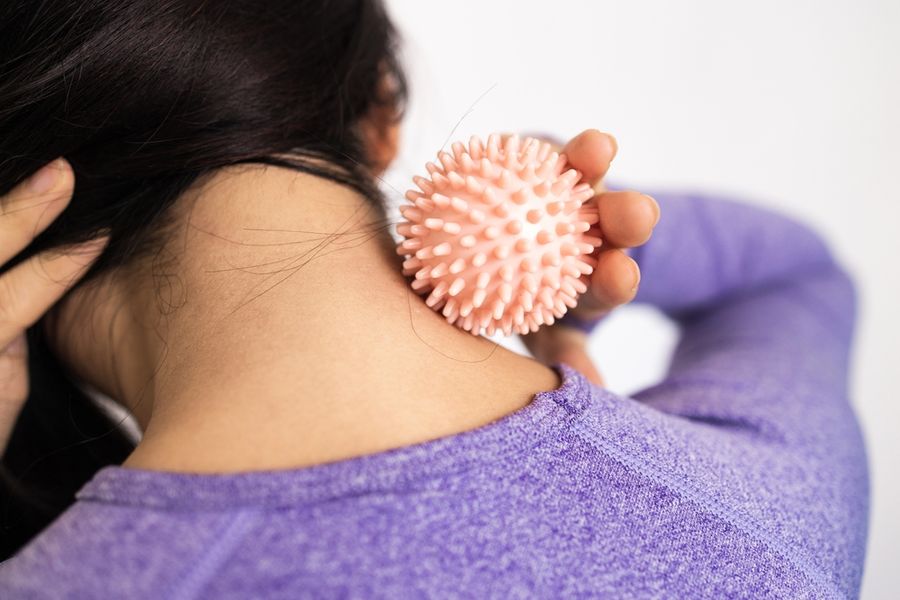
A massage ball is better than a foam roller for small, hard-to-reach spots. It can work well on the arches of the feet, glutes, upper back, chest, and shoulders. Because the pressure is more focused, it can help target tight areas that a wide foam roller may miss.
Use a massage ball gently at first. Place it between your body and the floor or wall, then control the pressure by changing how much weight you lean into it. This tool is useful for self-myofascial release, but the goal is not to bruise the muscle or force pain. Foam rolling and similar pressure-based tools are generally used to reduce tissue tension and support range of motion, but they should be paired with movement afterward.
Pros:
- Better for small pressure points
- Easy to use against a wall
- Good for feet, glutes, chest, and upper back
- Takes up very little storage space
Cons:
- Can create too much pressure if used aggressively
- Easy to overdo on tender areas
- Not a full-body tool
- May be hard to use safely on the neck or spine
Top Choice
The Yoga Tune Up Therapy Ball Pair works well for smaller areas because each ball measures 2.5 inches and can be used alone for focused pressure or together as a pair to spread pressure. The set also comes with a snug-grip tote, which makes it easy to keep nearby for foot, shoulder, glute, or upper-back work.
Stretch Strap
A stretch strap is a simple tool that can help with hamstring, calf, hip, shoulder, and chest stretches. It gives you extra reach without forcing your hands, back, or neck into uncomfortable positions. This makes it useful for people who feel too stiff to hold certain stretches on their own.
Stretching may help improve range of motion, and safe technique matters. Warm muscles are easier to stretch, and each stretch should feel like mild tension rather than pain. A strap can help you stay controlled because you can shorten or lengthen the hold instead of yanking your body into place.
Pros:
- Helps with controlled stretching
- Useful for hamstrings, calves, shoulders, and hips
- Good for beginners who lack flexibility
- Easy to store or pack for travel
Cons:
- Can encourage pulling too hard
- Does not build much strength by itself
- Requires patience and careful positioning
- Not a quick fix for long-term stiffness
Top Choice
The OPTP Stretch Out Strap is a practical choice because its multiple loops make it easier to control stretching without pulling too hard or losing your grip. The version with the booklet includes more than 30 stretches and video-guide access, which can help beginners use it for hamstrings, shoulders, calves, and general mobility work.
Resistance Bands
Resistance bands are useful because mobility is not only about stretching. Strong muscles help support joints through daily tasks like standing up, climbing stairs, reaching overhead, and carrying groceries. Bands can add light or moderate resistance without needing bulky weights.
Resistance-band training can build strength in a way that is practical for home use. It can also offer strength gains similar to traditional gym equipment when used consistently and with enough challenge. Bands work well for rows, side steps, glute bridges, shoulder work, squats, and gentle warmups.
Pros:
- Builds strength through controlled movement
- Lightweight and easy to store
- Useful for upper- and lower-body exercises
- Can be adjusted by changing band tension or position
Cons:
- Bands can snap if damaged or overstretched
- Resistance can feel uneven compared with weights
- Latex bands may not work for people with latex sensitivity
- Form still matters, especially for shoulders and knees
Top Choice
THERABAND Professional Latex Resistance Bands are a good option because they are made for resistance exercise, strength training, physical therapy, and rehabilitation use. The brand also uses a color-coded resistance system, which can help users progress from lighter to heavier resistance instead of guessing which band to use.
Yoga Blocks
Yoga blocks help bring the floor closer during stretches and mobility drills. They can support your hands in standing stretches, lift your hips in seated positions, or make gentle chest-opening work more comfortable. For many people, blocks make mobility work feel less strained.
The value of yoga blocks is support. Yoga-based movement can improve flexibility, strength, and balance, and props can make positions more approachable for people who cannot comfortably reach the floor. Blocks are especially useful when tight hips, hamstrings, or shoulders make a stretch feel forced.
Pros:
- Makes stretches easier to modify
- Helps reduce strain in floor-based positions
- Useful for yoga, mobility, and recovery routines
- Good for beginners and stiff movers
Cons:
- Does not provide resistance on its own
- Foam blocks can compress over time
- Too much support may limit challenge if never progressed
- Not enough for people who need strength work
Top Choice
The Manduka Recycled Foam Yoga Block is a useful pick because it is lightweight and designed to provide support and comfort during practice. The standard block size is commonly listed at 4 x 6 x 9 inches, which makes it practical for bringing the floor closer during standing stretches, seated work, and supported mobility drills. It’s easy to clean, too!
Balance Pad
A balance pad adds an unstable surface for simple standing drills. It can be used for single-leg stands, gentle weight shifts, supported squats, or ankle-control work. Because the surface is soft, your feet and lower legs must work harder to keep you steady.
Balance work matters for daily movement, especially as people age. Balance exercises can support stability, confidence, and mobility, and older adults are encouraged to include balance activity along with strength and aerobic exercise. A balance pad should be used near a wall, counter, or sturdy chair until you know how steady you feel.
Pros:
- Helps train balance and foot control
- Useful for ankles, hips, and lower-body stability
- Can make simple drills more challenging
- Small enough for home storage
Cons:
- Not safe for everyone without support nearby
- Can increase fall risk if used carelessly
- Too advanced for some beginners
- Works best when paired with strength training
Top Choice
The AIREX Balance Pad is a strong choice because its soft foam surface is designed for barefoot balance training and creates an unstable surface that challenges the body to maintain balance. The pad is listed at 6 cm thick, which helps create the destabilizing feel used for ankle, foot, hip, and stability drills.
Mobility Stick
A mobility stick can help guide shoulder, spine, hip, and ankle movements. It gives your hands a fixed point to hold, which can make drills feel more organized. Some people use a stick for shoulder pass-throughs, supported lunges, hip hinges, and rotation work.
This tool is most useful when you want better control, not just deeper stretching. A stick can help you notice whether one side moves differently than the other. Since stretching and mobility work should be controlled and pain-free, the stick should guide the movement rather than force it.
Pros:
- Helps with controlled range-of-motion drills
- Useful for shoulders, hips, ankles, and spine rotation
- Can improve body awareness during movement
- Helpful for warmups before strength work
Cons:
- Takes more instruction than simpler tools
- Can be misused if you force range of motion
- Longer sticks need storage space
- Not necessary for every home routine
Top Choice
The Stick Mobility Training Stick is a better choice than a basic broomstick because it is designed to flex under tension and return, while also using non-slip silicone grips for control. The long version measures 76 inches and gives more leverage and support for mobility, balance, and strength-based movement drills.
How to Build a Simple Mobility Routine
A good home routine does not need every tool at once. Start with one soft-tissue tool, one stretching tool, and one strength or balance tool. For example, you might use a foam roller for the calves and upper back, a strap for hamstrings, and a band for hip and shoulder strength.
Keep the routine short enough to repeat. Ten minutes done often is usually more realistic than a long routine you avoid. A simple order is soft tissue first, then stretching, then light strength or balance work. This helps the body move through the range you just practiced.
Start Small and Move Better Over Time
Daily movement shouldn’t require needless complication. That’s why the best at-home mobility tools are light-weight, portable, and easy to use.
Choose based on your main problem. Pick a foam roller or massage ball for tight muscles, a strap or block for limited flexibility, bands for strength, and a balance pad for steadiness. Start gently, stay consistent, and let the tools support better movement instead of turning mobility into another chore.
We created this article in conjunction with AI technology, then made sure it was fact-checked and edited by a SpendModo editor.