

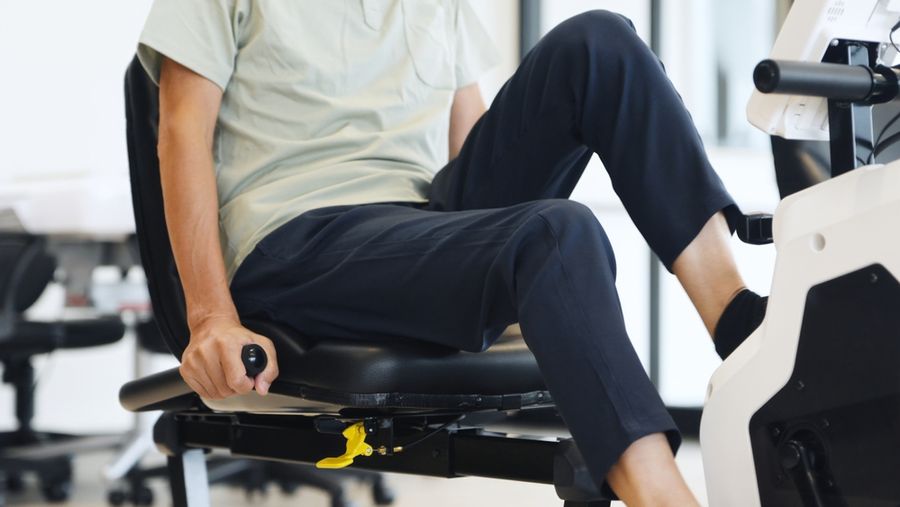
If your knees, hips, back, or balance is stopping you from staying fit, an indoor recumbent bike can make cardio feel more approachable. The seat is wider, the riding position is more supported, and the step-through frame can be easier to use than a traditional bike. To choose the best model, it's imperative to consider your space, comfort needs, resistance range, and whether you want simple tracking or app-connected workouts.
Why Choose a Recumbent Bike?
A recumbent bike places you in a seated, slightly reclined position with back support. That makes it different from an upright exercise bike, where your body leans forward and more weight rests through your hands, hips, and seat. For many home users, the recumbent position feels steadier and less tiring during longer rides.
Stationary biking is often treated as a low-impact option because it lets you move your legs without the repeated pounding that comes with running or jumping. That can make it useful for people who want cardio while being kinder to their joints.
A recumbent bike may also be easier to start and stop safely. Many models have a step-through frame, so you do not need to swing your leg high over the bike. That can matter for older adults, beginners, people returning to exercise, or anyone who feels unsure on taller fitness equipment.
The tradeoff is that recumbent bikes are not always the best choice for high-intensity cycling practice. They are built more for comfort, steady cardio, and repeatable use. If your main goal is road-bike-style training, an upright or indoor cycling bike may feel closer to that experience.
What to Look For Before You Buy
Start with the seat. A good recumbent bike should let you adjust the seat forward and back so your legs can pedal without locking your knees. A supportive backrest also matters, especially if you plan to ride for more than 10 or 15 minutes at a time.
Next up, look at the frame design. A low step-through frame is helpful if mobility is a concern. A heavy, stable frame may feel better during harder pedaling, but it can also be harder to move. Some models weigh close to 100 pounds, so make sure transport wheels are included if the bike will not stay in one place.
Resistance is another key feature. Basic bikes may offer a simple knob with a small number of resistance levels. More advanced bikes may use electronic controls with many levels, built-in programs, or heart-rate workouts. The right choice depends on how much structure you want.
Also check the console. Some riders only need time, speed, distance, and calories. Others may want Bluetooth, app pairing, tablet storage, heart-rate feedback, or built-in programs. More tech is not always better if it makes the bike harder to use.
Best Overall: Horizon 5.0 R Recumbent Bike
The Horizon 5.0 R is a strong overall choice because it combines comfort, adjustability, and useful technology without making the workout feel too complicated. It has a step-through frame, an adjustable padded seat with lumbar support, 100 electronically controlled resistance levels, five built-in programs, Bluetooth FTMS, a fan, a tablet holder, and a USB charging port.
This model makes sense for users who want a bike that can grow with them. The wide resistance range gives beginners room to start gently, while stronger riders can still build harder workouts. The step-through frame and supported seat also fit the joint-friendly purpose of this category.
The best buyer is someone who wants a polished home cardio machine but does not need a large built-in screen. You can use your own phone or tablet for entertainment or app-based workouts, which may be more flexible than paying for a bike built around one locked-in screen.
- Ideal for: People who want a well-rounded recumbent bike with strong comfort features, a wide resistance range, and enough tech to support long-term use without needing a built-in touchscreen.
- Not ideal for: casual bikers who only want to take a spin occasionally.
Best for App-Connected Value: Sunny Health & Fitness Smart Magnetic Recumbent Bike
The Sunny Health & Fitness Smart Magnetic Recumbent Bike is a practical pick for people who want app support without moving into a premium price tier. It includes a cushioned seat and backrest, eight magnetic resistance levels, a belt-drive system, transport wheels, foot stabilizers, a device holder, heart-rate feedback, and SunnyFit app access.
This model is best for users who want simple workouts with a little extra variety. The app connection can help if you get bored easily or want guided rides and route-style workouts. The resistance range is not as broad as some higher-end bikes, but it is enough for many steady cardio sessions.
Comfort is the main selling point. The wide cushioned seat and back support help make the bike approachable for beginners, older adults, and people who do not like the feel of narrow upright bike seats. The transport wheels also make it easier to shift the bike when needed.
- Ideal for: Budget-conscious riders who want a comfortable recumbent bike with basic smart features, app support, and simple resistance for steady home cardio.
- Not ideal for: Serious riders may want more resistance levels, a heavier frame, or a more advanced console.
Best Simple Pick: Marcy ME-709 Recumbent Bike
The Marcy ME-709 is a straightforward choice for people who want a basic recumbent bike without app features or a complex console. It has magnetic resistance with eight preset levels, an adjustable high-density foam seat, a step-through frame, counterbalanced pedals with adjustable straps, a compact design, and a display that tracks time, speed, distance, calories, and odometer.
This bike fits users who want to pedal while watching TV, listening to music, or keeping a simple routine. The knob-based resistance is easy to understand. The display gives enough feedback to track a basic session without turning the workout into a tech setup.
The Marcy ME-709 is also a good example of why not every useful recumbent bike needs advanced features. For many people, comfort and consistency matter more than app pairing. A bike that is easy to use may get more mileage than a smarter bike that feels annoying to set up.
- Ideal for: Beginners, casual riders, and anyone who wants a simple recumbent bike without apps, subscriptions, or complicated controls.
- Not ideal for: Those who may wish to upgrade to guided programs, Bluetooth, heart-rate workouts, or a broad resistance range.
Best Premium Comfort Pick: 3G Cardio Elite RB X
The 3G Cardio Elite RB X is a stronger fit for people who want a more adjustable, comfort-focused bike. It includes 16 levels of magnetic resistance, 12 built-in programs, three heart-rate interactive workouts, four user profiles, hand-grip heart-rate sensors, an included wireless heart-rate strap, and a multi-position adjustable seat system. It also has a compact 49-inch length and a 350-pound user weight capacity.
This model stands out because of how much attention it gives to fit. The seat can adjust forward and back, tilt, and recline, which is useful for households with more than one rider. The bike can accommodate riders who are between 5’ and 6’5” tall.
The 3G Cardio Elite RB X is best for riders who know they will use the bike often and want comfort to be the main feature. It can also make sense for people who have disliked cheaper bike seats in the past and want more ways to fine-tune the riding position.
- Ideal for: Frequent riders who care most about seat comfort, fit adjustments, and a more supportive ride for longer or more regular workouts.
- Not ideal for: Those who only want occasional light pedaling.
Best Tech-Forward Pick: Spirit Fitness XBR55
The Spirit Fitness XBR55 is a good match for users who want a recumbent bike with more console features, more training variety, and better entertainment support. It has a 7.5-inch multi-color display, USB charging, Bluetooth speakers, an adjustable fan, preset programs, pulse sensors, 20 magnetic resistance levels, Bluetooth FTMS, app connections, wireless heart-rate monitor compatibility, a tablet holder, and a reclining seat.
This bike is best for someone who wants the feel of a more complete fitness machine. The display, programs, fan, speakers, and resistance controls can make longer workouts feel less dull. The reclining seat and cushioned pedals also support comfort during repeated use.
The XBR55 is especially useful if more than one person will use the bike. A wider feature set can serve different workout styles, from easy recovery rides to structured interval sessions. The app and wireless options also give it more flexibility than a very basic recumbent bike.
- Ideal for: Users who want a more advanced recumbent bike with built-in programs, entertainment-friendly features, app compatibility, and a fuller home-gym feel.
- Not ideal for: Those who don’t want to face a significant learning curve with regards to complex features.
How to Choose the Right Bike for Your Body and Space
Choose based on fit first. Your knees should stay slightly bent at the farthest point of the pedal stroke, and your hips should not rock from side to side. If the seat does not adjust enough for your height, the bike may feel wrong no matter how many features it has.
Think about how you will get on and off the bike. A step-through frame is useful if you have stiff hips, balance concerns, or limited mobility. Large pedals with straps can also help your feet stay in place during slower rides.
Measure your space before buying. Recumbent bikes are usually longer than upright bikes. Leave room behind and beside the machine so you can sit down, adjust the seat, and move safely around it. Unlike upright bikes, you won’t have to worry about measuring your overhead space with a recumbent model!
Finally, match the tech level to your habits. If you love guided workouts, choose Bluetooth or app support. If you prefer simple routines, a clear display and easy resistance control may be better.
A Comfortable Bike Is the One You’ll Use
The best indoor recumbent bike is not always the one with the most features. It is the one that fits your body, feels stable, supports your back, and makes cardio easy enough to repeat. For many joint-conscious riders, that matters more than chasing the hardest workout.
Choose the bike that solves your real problem. If pain keeps you from walking long enough, prioritize comfort. If boredom stops your routine, prioritize programs and app support. If space is tight, check dimensions first. A good recumbent bike should make movement feel less like a chore and more like something you can keep doing.
We created this article in conjunction with AI technology, then made sure it was fact-checked and edited by a SpendModo editor.