

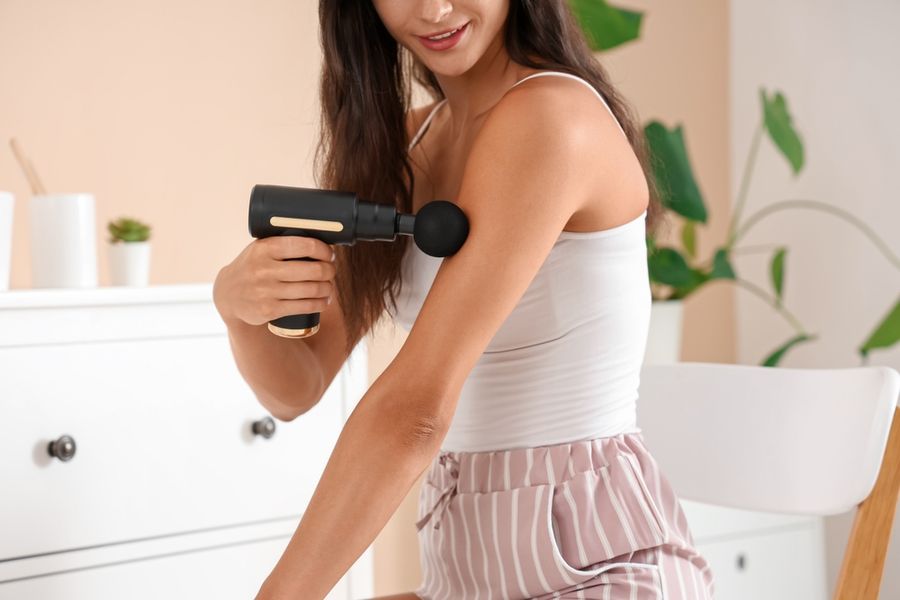
Finding effective ways to ease muscle tension has become a priority for everyone from competitive athletes to office workers dealing with daily aches and stiffness. Massage guns have surged in popularity because they offer a convenient way to target sore muscles at home, after workouts, or while traveling. With dozens of models available and feature lists that often sound technical, understanding what separates one device from another can make the buying process far less overwhelming.
What Are Massage Guns and What Benefits Can They Offer?
Massage guns are handheld devices that use rapid, repetitive pulses to apply pressure to muscles. Often referred to as percussive therapy devices, they work by delivering quick bursts of force into soft tissue. Unlike traditional vibration massagers, most massage guns are designed to reach deeper layers, which may help relieve muscle pain and tightness after physical activity. They typically include multiple speed settings and interchangeable attachments to target different muscle groups.
Many people use massage guns to support recovery, improve mobility, and reduce post-exercise muscle soreness. Research suggests that percussive therapy may help increase blood flow and temporarily improve range of motion. Some users also find that massage guns help ease muscle tension caused by long workdays, repetitive movements, or stress. While they aren't a replacement for medical treatment or professional care, they can be a useful addition to a broader recovery and wellness routine.
Top Features That Matter Before You Buy
1. Adjustable Speed Settings
Different muscle groups respond differently to pressure and intensity. A massage gun with multiple speed settings gives you greater control, allowing gentle treatment for sensitive areas and stronger percussion for larger muscles such as the glutes, hamstrings, and quadriceps. Beginners often appreciate starting with lower settings before increasing intensity as they become more comfortable, so model with only three speeds may be suitable.
2. Amplitude (Stroke Depth)
Amplitude refers to how far the massage head travels with each percussion. Models with greater amplitude generally provide deeper muscle stimulation. Higher-end massage guns often offer stroke depths between 12mm and 16mm, while entry-level models may be closer to 8mm or 10mm. People seeking deep tissue relief often prioritize amplitude when comparing devices.
3. Stall Force
Stall force measures how much pressure you can apply before the motor slows down or stops. A higher stall force usually indicates a more powerful massage gun. Athletes and individuals with dense muscle tissue often benefit from higher stall force ratings because the device can maintain performance even under heavier pressure.
4. Attachment Variety
Different attachments are designed to provide targeted relief to different parts of the body. A standard ball attachment (which tend to be the default attachment included) often works well for larger muscle groups, while bullet-shaped heads can target trigger points and small areas. Fork attachments are commonly used around muscles near the spine, calves, or Achilles tendon. Having several attachment options increases versatility.
5. Ergonomic Design
Comfort matters more than many shoppers realize. A well-designed handle makes it easier to reach areas such as the upper back, shoulders, and hamstrings without straining your wrist or arm. Ergonomic shapes can also reduce fatigue during longer recovery sessions.
6. Battery Life
Most massage guns charge via a usb cable, but battery life can vary significantly between models. Some provide only a couple of hours per charge, while others last five hours or longer. If you plan to use your massage gun frequently, travel often, or bring it to the gym, longer battery life may be worth prioritizing.
7. Noise Level
Older massage guns earned a reputation for being loud, but many newer models operate much more quietly. A quieter motor can make sessions more relaxing and convenient, especially in shared spaces, offices, apartments, or households with children.
8. Weight and Portability
A heavy massage gun may feel powerful, but it can become tiring to hold during longer sessions. A portable massage gun will be more lightweight and therefore easier to maneuver and pack for travel. Some also include carrying cases that help keep attachments organized.
9. Ease of Use
Complicated controls and confusing menus can discourage regular use. Many buyers prefer straightforward designs with simple buttons, clear displays, and intuitive controls. The easier a massage gun is to operate, the more likely you'll use it consistently.
10. Safety Features
Features such as automatic shutoff and overheating protection help prevent excessive use and protect the device's motor. Built-in safety measures can also reduce the risk of overworking sore muscles during longer recovery sessions.
Who Benefits Most From Using a Massage Gun?
Massage guns are often associated with athletes, but their appeal extends far beyond sports. Runners, cyclists, weightlifters, and fitness enthusiasts frequently use them before and after workouts to support muscle relaxation and recovery. People who spend long hours sitting at desks may also use percussive therapy for pain relief, addressing tension in the neck, shoulders, hips, and lower back caused by prolonged sitting.
Many users turn to massage guns simply because they're convenient. Scheduling regular appointments with a massage therapist isn't always practical, and self-care tools provide an option for addressing minor muscle discomfort at home. While professional treatment remains valuable for certain conditions, a massage gun can offer quick relief between appointments and help users stay consistent with recovery habits.
When Should You Use a Massage Gun?
Timing can influence the experience and potential benefits of percussive therapy. Before exercise, many people use a massage gun as part of a warm-up routine to help avoid injury. Gentle percussion may help prepare muscles for movement by increasing circulation and promoting mobility. A short session before activity can be particularly appealing for individuals who feel stiff when beginning workouts.
After exercise, massage guns are commonly used to address muscle soreness and tension. Many users focus on major muscle groups that were heavily involved during training. Others use massage guns during the workday or before bed to relieve everyday muscle tightness. The key is moderation and paying attention to how your body responds rather than assuming more pressure always produces better results.
Massage Gun Safety: Do's and Don'ts
Do:
- Start with the lowest speed setting if you're new to percussive therapy.
- Keep the device moving rather than holding it in one spot for too long.
- Focus on muscles rather than bones or joints.
- Stop immediately if you experience pain.
- Follow the manufacturer's instructions.
- Consult a healthcare professional or physical therapist if you have medical concerns.
Don't:
- Use a massage gun directly on the spine or neck vertebrae.
- Apply excessive pressure to sore or injured areas.
- Use it over surgical sites or healing wounds.
- Treat areas with swelling, blood clots, or acute inflammation.
- Assume longer sessions are always better.
- Ignore discomfort or worsening symptoms.
Top Massage Guns to Consider
|
Massage Gun |
Best For |
Features & Benefits |
|---|---|---|
|
Overall Performance & Recovery |
Ergonomic triangular handle, multiple speed settings, heat therapy option, effective deep tissue relief, strong brand reputation, free access to the Therabody app for guided routines |
|
|
Budget-Conscious Buyers |
Comes with multiple heads, long battery life, multiple speed settings, versatile for many muscle groups |
|
|
Deep Tissue Relief |
Multiple massage heads, several intensity levels, designed for deep muscle recovery and post-workout use |
|
|
Travelers & On-the-Go Use |
Compact and lightweight, travel-friendly design, simple controls, portable recovery solution, touted as one of the quietest massage guns on the market |
|
|
Athletes & Heavy Training |
Powerful motor, multiple attachments, quiet operation, strong stall force suitable for demanding recovery needs |
Finding the Right Balance Between Features and Budget
Massage guns range from budget-friendly options to premium models packed with advanced features. Higher prices often bring deeper stroke depth, stronger motors, longer battery life, and improved ergonomics. However, not every user needs professional-grade specifications. Someone looking for occasional relief after long workdays may be perfectly happy with a simpler device.
The best approach is to match features to your actual needs. A traveler may prioritize portability, while a competitive athlete may focus on power and stall force. Considering how often you'll use the device, where you'll use it, and which muscle groups you plan to target can help narrow the field and prevent overspending on features that won't add meaningful value.
Making a Smarter Recovery Investment
Massage guns have evolved from niche fitness gadgets into widely used recovery tools for people with many different lifestyles. Their ability to deliver targeted percussive massage makes them appealing for everything from post-workout recovery to easing everyday tension. Understanding factors such as amplitude, stall force, battery life, ergonomics, and attachment options can make comparing models much easier.
The most effective massage gun isn't necessarily the most expensive one. It's the device that aligns with your recovery goals, comfort preferences, and daily routine. By focusing on the features that truly matter, shoppers can choose a massage gun that supports long-term use and delivers a more satisfying recovery experience.
We created this article in conjunction with AI technology, then made sure it was fact-checked and edited by a SpendModo editor.